Ethics: The Invisible Foundation of Successful Mediation
Anindya Kumar Bhattacharya
July 24, 2026
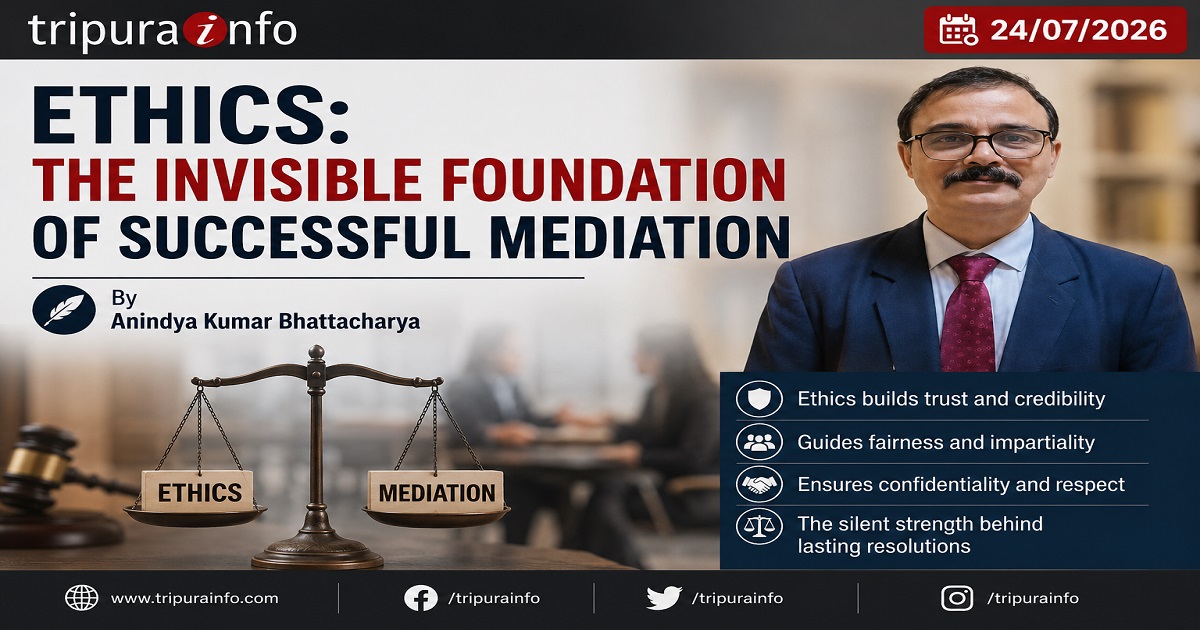
Mediation has emerged as one of the world's most effective methods of resolving disputes. Unlike litigation, where a judge imposes a decision, mediation allows the parties themselves to negotiate a mutually acceptable settlement with the assistance of a neutral mediator. The process is quicker, less expensive, confidential and often preserves relationships that courtroom battles may permanently damage. Yet the success of mediation depends not merely on negotiation skills or legal knowledge—it depends fundamentally on ethics.
Ethics in mediation is less visible than legal procedure, but it is far more influential. A mediation conducted without honesty, fairness and professional integrity can collapse, leaving parties more distrustful than before. Ethical conduct is therefore not an optional virtue; it is the foundation upon which public confidence in mediation is built.
Lawyers entering mediation perform a role very different from that of courtroom advocates. Their objective is no longer to defeat an opponent at all costs but to help clients secure the best possible outcome through constructive negotiation. While lawyers remain bound by their professional duties during mediation, many jurisdictions, including guidance based on the American Bar Association's professional conduct rules, generally treat mediation as an extension of negotiation rather than a separate category of legal practice.
This unique setting raises important ethical questions. One of the most debated concerns is the lawyer's duty of candour towards the mediator. During confidential caucus sessions, mediators often ask probing questions about settlement flexibility or a client's genuine expectations. Although lawyers may not always be legally obliged to reveal their client's true bottom line, deliberately misleading the mediator can seriously undermine the process. Mediation depends heavily upon trust. A lawyer who gains a reputation for deception may find future mediators reluctant to rely on his or her representations, ultimately weakening the client's prospects for settlement.
Another ethical dilemma arises when clients instruct their lawyers to "test the waters" by pretending to accept a settlement proposal merely to discover whether the opposing party will also agree. Although a settlement may not become legally binding until formally executed, falsely communicating acceptance simply to obtain strategic information wastes everyone's time and violates the spirit of good-faith negotiation. Lawyers owe duties not only to their clients but also to the integrity of the mediation process itself.
The principle of good faith deserves particular attention. Many court-connected mediation programmes expect parties to participate sincerely. Good faith does not require either side to surrender its legal rights or accept an unfavourable settlement. Rather, it requires genuine participation, an open mind and a willingness to explore possible solutions. A party attending mediation solely to gather intelligence about the opponent, while possessing no authority or intention to settle, defeats the very purpose of mediation.
Ethical responsibilities also extend to dealings with the mediator. Consider a situation where a large institutional litigant hints that future mediation appointments may depend upon a favourable outcome in the present case. Even if no improper promise is intended, such remarks may create an appearance that the mediator's future business depends upon pleasing one party. Since neutrality is the cornerstone of mediation, experienced lawyers avoid any conduct that could compromise—or even appear to compromise—the mediator's independence.
Mediator neutrality itself is frequently scrutinised. Repeat appointments by insurance companies, banks or government agencies sometimes create concerns among individual litigants that mediators may consciously or unconsciously favour repeat users. Whether or not actual bias exists, public confidence requires transparency. Disclosure of potential conflicts of interest, impartial appointment procedures and equal participation in selecting the mediator are essential safeguards.
Lawyers also have an important ethical duty to educate clients about Alternative Dispute Resolution. Many clients instinctively believe that filing a lawsuit is the only way to resolve a dispute. Responsible legal advice requires explaining what mediation is, how it differs from litigation, its advantages and limitations, and whether it is appropriate for the particular dispute. Only then can clients make informed decisions about the best course of action.
Mediators themselves are guided by well-recognised ethical principles. Internationally, the Model Standards of Conduct for Mediators, jointly developed by the American Arbitration Association, the American Bar Association and the Association for Conflict Resolution, emphasise party self-determination, impartiality, confidentiality, competence, informed consent, avoidance of conflicts of interest and integrity throughout the mediation process. These standards have significantly influenced mediation practice across many jurisdictions.
India has also taken a significant step by enacting the Mediation Act, 2023, which seeks to institutionalise mediation, encourage community and online mediation, and strengthen the enforceability of mediated settlement agreements. As mediation expands across commercial, family, consumer and governmental disputes, maintaining high ethical standards will become increasingly important to ensure public trust in this emerging system.
Ultimately, mediation succeeds because people trust the process. Parties disclose confidential information because they believe it will remain confidential. They make concessions because they trust the mediator's neutrality and the fairness of negotiations. Every ethical lapse weakens that confidence, while every act of honesty, fairness and professionalism strengthens mediation as a credible instrument of justice.
Winning a lawsuit may depend upon persuasive legal arguments, but successful mediation depends upon credibility. Lawyers who negotiate honestly, clients who participate sincerely and mediators who remain genuinely impartial create an environment where even deeply rooted conflicts can end in lasting and mutually acceptable solutions. As mediation becomes an integral part of modern justice systems, professional integrity will remain its greatest strength and its most valuable currency.
(Tripurainfo)
more articles...