The World Stands Before the Furnace of the Last Age!!!
Biswanath Bhattacharya
March 1, 2026
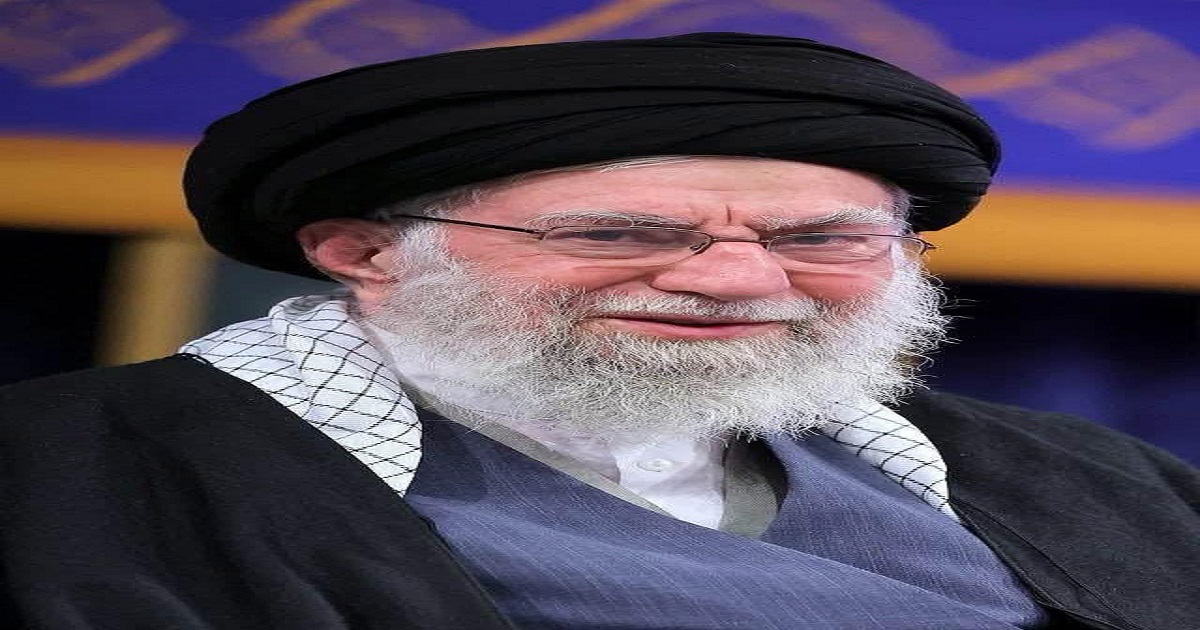
The Last War began with a death that felt like the closing of an era and the opening of a wound. The Supreme Hierophant — the final inheritor of a clerical lineage that traced back to Ayatollah Khomeini — was assassinated in a strike so precise, so sudden, that even the desert seemed to recoil. His authority had been absolute, his presence the axis around which a region’s identity revolved. When he fell, the world felt the tremor.
The Middle East erupted first. Not in a single explosion, but in a thousand fractures. Cities that had survived empires and invasions found themselves torn apart by rival clerics who believed the mantle of destiny had passed to them. Tehran became a battlefield of sermons and militias. Qom became a fortress of competing visions. Najaf became a shrine contested by men who claimed revelation in their sleep.
The assassination did not create chaos; it revealed it. The region had been a sealed vessel for decades, and the death of the Hierophant shattered the lid.
While the Middle East burned, the West convulsed.
Donald Trump, restored to power with a fervor that bordered on prophetic self-belief, governed as though the world were a stage built for his final act. His speeches thundered with warnings of betrayal and purification. His decrees landed like hammer blows. Treaties dissolved. Alliances cracked. The United States became a storm engine, driven by a leader who believed history had placed him at the center of a cosmic reckoning.
China watched with the stillness of an ancient colossus. Its leaders understood that Trump’s impulses could ignite a conflict that would consume continents. They moved with the patience of dynasties, fortifying alliances, expanding influence, preparing for a confrontation they no longer believed could be avoided. In their war rooms, they spoke of him not as an adversary but as a catalyst — a force whose unpredictability could unravel the world’s last threads of restraint.
The battles began quietly.
A drone lost over the Strait of Hormuz.
A convoy destroyed outside Basra.
A missile test misinterpreted in the South China Sea.
Each incident was small. Each was survivable.
But the world had grown too brittle.
Every blow echoed like a hammer against glass.
The first great city to fall was Damascus.
Not to an army — to revelation.
Its streets filled with factions who fought not for land but for the right to define the future. The city burned for seven days. When the smoke cleared, nothing remained but competing banners and the echo of prayers that no longer had a center.
Baghdad followed.
Its government dissolved in a single night.
Ministers fled into the desert as if chased by an invisible force.
Baghdad became a capital without a nation, a throne without a king.
The Pacific ignited next.
Trump ordered maneuvers that pushed the region past its breaking point.
Fleets moved like shadows.
Satellites blinked out.
The ocean became a chessboard where every piece was a weapon.
The Battle of the South Pacific lasted six hours.
Neither side won.
Both sides lost.
The ocean swallowed ships that had cost billions.
The sky filled with debris that would orbit the Earth for decades.
Europe tried to remain neutral.
Neutrality died in Berlin.
The government fractured under pressure.
Paris followed, its streets turning from protests to riots to something unrecognizable.
London sealed itself off, a fortress surrounded by a continent in collapse.
Africa became a crossroads of armies.
Johannesburg rose as the center of a new coalition — a gathering of states determined to survive the Furnace Age by forging a unity the old world had never managed.
South America remained silent until Brazil rose.
It declared itself neutral, but neutrality in the Last War meant strength.
It became a refuge for scientists, diplomats, thinkers — the seed of a new order.
North America fractured from within.
The United States, under Trump’s volatile leadership, found itself torn between loyalty and fear.
States argued.
Cities seceded in all but name.
Canada closed its borders.
Mexico fortified its own.
The continent became a mosaic of tension, each piece trembling under the weight of the next decision.
The Last War ended not with victory but with exhaustion.
Nations collapsed not from defeat but from the impossibility of continuing.
The Furnace Age had burned too long.
From the ashes, new powers emerged:
• China, scarred but intact, became the anchor of the East.
• Brazil became the intellectual capital of the new world.
• Africa, united by necessity, became a force defined by survival rather than history.
• The Middle East began to rebuild under leaders who had learned the cost of prophecy.
• Europe became a constellation of city-states bound by shared trauma.
• The United States became a nation forced to confront the consequences of its storms.
The Furnace Age passed.
The Last War ended.
But the world that emerged was not the world that had entered it.
It was something smaller, wiser, and forever marked by the fire that had nearly consumed it.
(Tripurainfo)
more articles...