Asha Bhosle: The Eternal Voice Who Sang India Into Its Own Heart!!!
Biswanath Bhattacharya
April 12, 2026
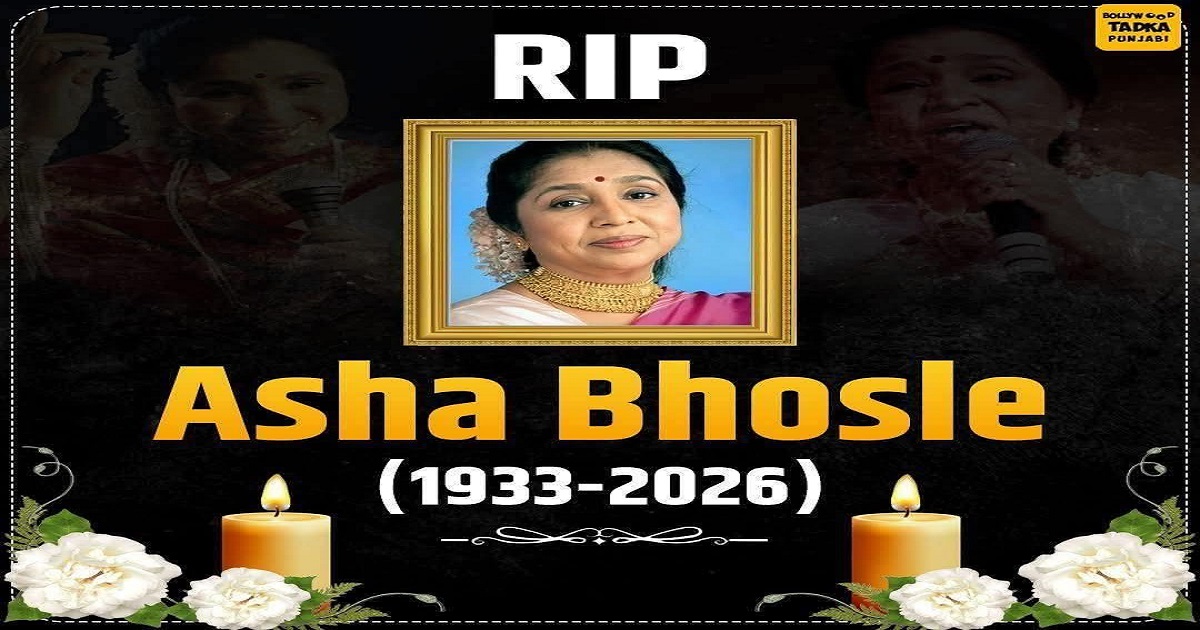
Asha Bhosle’s passing today feels like the moment when a great river finally meets the sea—quiet, inevitable, yet leaving behind a landscape forever shaped by its journey. At 92, she departs as one of India’s most luminous musical forces, a woman whose voice became a companion to generations, threading itself through the country’s joys, heartbreaks, rebellions, and celebrations.
Her story began in the shadow of struggle. Born in 1933 in Sangli to the legendary Deenanath Mangeshkar, she stepped into the world of music almost as soon as she could speak. After her father’s early death, the responsibility of supporting the family fell on the Mangeshkar sisters, and Asha—barely ten—entered the recording studio. What began as necessity soon revealed itself as destiny.
Across more than eight decades, she recorded over 12,000 songs in more than 20 languages, shaping an artistic legacy unmatched in scale or versatility. She could glide from classical compositions to seductive cabaret numbers, from tender lullabies to fiery folk tunes, from ghazals soaked in longing to pop-infused experiments that felt decades ahead of their time. Her voice was not just flexible—it was fearless. She embraced what others avoided, and in doing so, she expanded the very definition of playback singing.
Her collaborations with Rahul Dev Burman—her life partner and one of India’s most innovative composers—became the stuff of legend. Their music was not just a partnership of talent but a meeting of two restless, inventive spirits. RD Burman’s ancestral roots in Tripura gave Asha Bhosle a special connection to the Northeast, and over time she came to be affectionately regarded as a daughter of Tripura as well. The state embraced her as one of its own, celebrating the woman who carried its cultural link into the heart of Indian cinema.
Her journey was not without storms. She faced early personal hardships, professional rivalries, and the constant pressure of being compared to her iconic elder sister, Lata Mangeshkar. Yet she carved her own path—bold, modern, unafraid. If Lata was the moonlight of Indian music, Asha was its flame: warm, unpredictable, and dazzling.
Her songs became cultural milestones. The smoky allure of Piya Tu Ab Toh Aaja, the velvet melancholy of Dil Cheez Kya Hai, the youthful sparkle of O Mere Sona Re, the aching sweetness of Do Lafzon Ki Hai—each one carried a different shade of her soul. She could be mischievous, sensual, devotional, or heartbreakingly tender, sometimes all within the same decade.
Even in her later years, she remained unstoppable. She performed live well into her nineties, her voice still carrying that unmistakable glint—like a jewel that refused to lose its shine. Younger artists sought her blessings, audiences rose to their feet, and the world continued to marvel at her stamina, her spirit, her sheer love for music.
Today, as India mourns, it also remembers. It remembers the girl who sang to survive, the woman who reinvented herself endlessly, and the artist who turned every note into a story. Asha Bhosle was not merely a singer; she was a living archive of India’s emotional history.
Her departure leaves a silence, but it is not empty. It is the kind of silence that follows a great symphony—full, resonant, echoing with memories. Her voice will continue to rise from radios, from film reels, from the hearts of millions who grew up with her songs. She may have stepped away from the earthly stage, but her music remains—an eternal flame glowing softly in the vast night of Indian culture.
Asha Tai is gone, but the song she gave us will never end.
(Tripurainfo)
more articles...