A Novel Initiative to Make Sepahijala a Child Marriage Free District
Jayanta Debnath
April 22, 2026

Sepahijala district of Tripura is emerging as a
powerful example of how determined administrative leadership and community
participation can address one of India’s most persistent social challenges,
child marriage. Under the leadership of District Magistrate Dr Siddharth Shiv
Jaiswal, IAS the district has launched an innovative and comprehensive
programme titled Mission Sankalp, with the vision of transforming Sepahijala
into a Child Marriage Free District well before national and global targets.
As of mid-2025, no district in Tripura has yet been
officially declared entirely free of child marriage. However, Sepahijala has
taken a decisive lead. Ten villages across Jampuijala, Charilam, and Nalchar RD
Blocks have already achieved the status of 'Aspiring Child Marriage Free
Villages' after maintaining zero incidents of child marriage for six
consecutive months. This progress reflects not only administrative efficiency
but also a growing social movement within communities.
Context and Need for Action:
Child marriage is not merely a social issue, it is a
structural challenge that undermines human development. It leads to the
disempowerment of girls across social, political, and economic spheres,
perpetuates an intergenerational cycle of malnutrition, and risks converting
India’s demographic dividend into a demographic burden. These consequences are
particularly severe in rural and socio-economically vulnerable areas, making
urgent and coordinated intervention essential.
Mission Sankalp was conceptualized in response to this
reality, recognizing that eliminating child marriage requires not only legal
enforcement but also a transformation in societal attitudes, economic
conditions, and institutional responses.
Mission Sankalp:
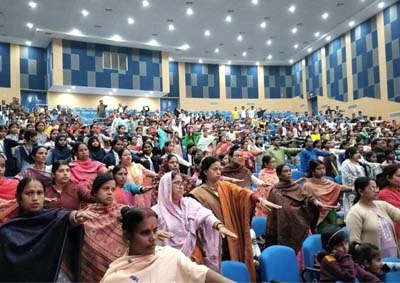 A Strategic Initiative
Launched in 2024, Mission Sankalp, meaning
commitmentis a district administration-led initiative designed to address child
marriage and teenage pregnancy through a holistic and convergent framework. It
brings together multiple departments, including health, education, police, and
social welfare, ensuring that efforts are synchronized and mutually
reinforcing.
The mission sets an ambitious target of eliminating
child marriage in Sepahijala by 2027, thereby achieving the objective ahead of
the United Nations Sustainable Development Goal target of 2030. The initiative
is driven by the powerful message, 'When Children Have Children,' emphasizing
the urgent need to break the cycle of early marriage and early motherhood.
Conceptual Framework:
Mission Sankalp is grounded in the Socio-Ecological
Model developed by Urie Bronfenbrenner, which recognizes that human behavior is
shaped by interactions across multiple levels. The model addresses individual
awareness and attitudes, interpersonal relationships within families and peer
groups, community norms and cultural practices, institutional roles such as
schools and workplaces, and the broader policy and legal environment.
By working simultaneously across these five levels,
the initiative ensures that behavioral change is both deep-rooted and
sustainable. The guiding principles of the mission, 'Do No Harm', Convergence, a survivor-centric
approach, and public participation in the form of a Jan Andolan, underline its
inclusive and ethical framework.
Strategic Focus Areas:
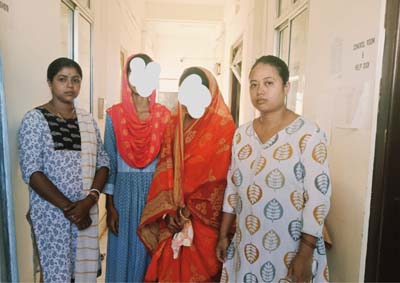 Mission Sankalp adopts a multi-dimensional approach
to tackle child marriage at its roots. Efforts to challenge patriarchal
mindsets and regressive social norms are carried out through community
platforms such as Village Health and Nutrition Days, Saas-Bahu Sammelans, and school-based
health programmes. These platforms create safe spaces for dialogue and
awareness, gradually transforming deeply embedded beliefs.
Mission Sankalp adopts a multi-dimensional approach
to tackle child marriage at its roots. Efforts to challenge patriarchal
mindsets and regressive social norms are carried out through community
platforms such as Village Health and Nutrition Days, Saas-Bahu Sammelans, and school-based
health programmes. These platforms create safe spaces for dialogue and
awareness, gradually transforming deeply embedded beliefs.
Simultaneously, the mission strengthens access to
safe and quality education by linking families to various government schemes
that incentivize girls’ education and delay marriage. Financial support,
mobility assistance such as bicycles and scooters, and scholarships play a
critical role in ensuring that girls remain in school and pursue higher
education.
A robust early warning and response mechanism has
been institutionalized within schools and colleges. In cases of absenteeism,
teachers immediately inform designated committees, and the information is
escalated through principals to Child Marriage Prevention Officers. This
triggers timely intervention by administrative and law enforcement authorities,
ensuring that potential cases of child marriage are prevented before they
occur.
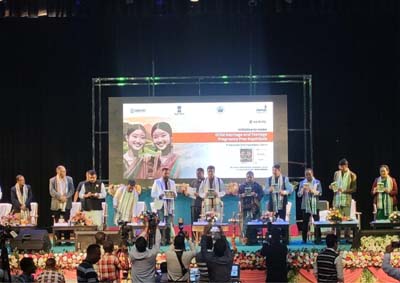 Legal awareness and enforcement are further
strengthened through targeted campaigns, dissemination of helpline information,
and active involvement of police authorities in reporting and investigation. At
the same time, economic empowerment initiatives led by livelihood missions
provide adolescents with career guidance and skill development opportunities,
reducing the socio-economic drivers of early marriage.
Legal awareness and enforcement are further
strengthened through targeted campaigns, dissemination of helpline information,
and active involvement of police authorities in reporting and investigation. At
the same time, economic empowerment initiatives led by livelihood missions
provide adolescents with career guidance and skill development opportunities,
reducing the socio-economic drivers of early marriage.
The mission also emphasizes data-driven governance
by improving data collection, monitoring, and analysis systems, enabling
evidence-based decision-making. Capacity building of frontline workers and
healthcare providers ensures effective counseling and service delivery, while
enhanced access to health and nutrition services addresses the specific needs
of adolescents, including reproductive health and protection from gender-based
violence.
Child Marriage Free Village:
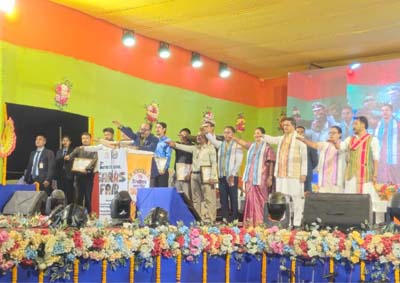 One of the most innovative aspects of Mission
Sankalp is the concept of the Child Marriage Free Village. This model creates a
sense of ownership and accountability at the grassroots level by encouraging
villages to commit to eliminating child marriage within their jurisdiction.
One of the most innovative aspects of Mission
Sankalp is the concept of the Child Marriage Free Village. This model creates a
sense of ownership and accountability at the grassroots level by encouraging
villages to commit to eliminating child marriage within their jurisdiction.
The initiative follows a phased implementation plan,
covering 35 villages by March 2025, 44 villages by March 2026, and 70 villages
by March 2027, ultimately encompassing all 169 Gram Panchayats and Village
Committees in the district. Each village undergoes a rigorous certification process,
beginning with a declaration by the Gram Pradhan, followed by verification at
the block and sub-divisional levels, and final approval by the District
Magistrate.
Villages are recognized under three categories based
on their performance: Aspiring (Bronze) for maintaining zero child marriages
for six months, Rising (Silver) for twelve months, and Model (Gold) for
twenty-four months. This structured recognition system not only motivates
communities but also establishes measurable benchmarks for progress.
Achievements and Outcomes:
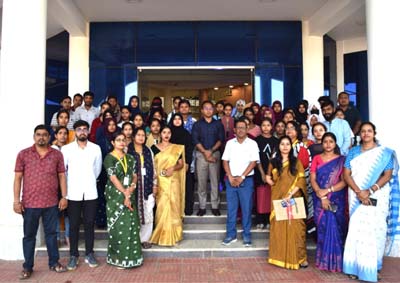 Mission Sankalp has already demonstrated significant
positive outcomes in Sepahijala district. There has been a marked increase in
community awareness and engagement, with citizens actively participating in the
movement against child marriage. Administrative convergence has improved,
ensuring coordinated action across departments, Child Welfare Committee and
block levels of governance.
Mission Sankalp has already demonstrated significant
positive outcomes in Sepahijala district. There has been a marked increase in
community awareness and engagement, with citizens actively participating in the
movement against child marriage. Administrative convergence has improved,
ensuring coordinated action across departments, Child Welfare Committee and
block levels of governance.
The initiative has contributed to positive
behavioral changes, particularly in promoting girls’ education and enhancing
their safety and well-being. The Child Marriage Free Village model has
introduced a new level of transparency and accountability at the grassroots,
making it a replicable framework for other regions.
Limitations and Way Ahead
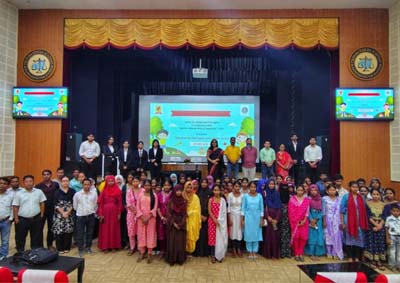 Despite its success, the initiative faces certain
challenges that require sustained attention. Deep-rooted social customs and
cultural beliefs continue to influence behavior in some areas, while
geographical and infrastructural constraints make outreach in remote regions
more difficult. Maintaining continuous monitoring and engagement is also
essential to ensure that progress is not reversed.
Despite its success, the initiative faces certain
challenges that require sustained attention. Deep-rooted social customs and
cultural beliefs continue to influence behavior in some areas, while
geographical and infrastructural constraints make outreach in remote regions
more difficult. Maintaining continuous monitoring and engagement is also
essential to ensure that progress is not reversed.
Looking ahead, the integration of technology for
real-time monitoring, strengthening of community institutions, and continuous
capacity building will be critical. Expanding partnerships and ensuring regular
evaluation will further enhance the effectiveness and scalability of the
initiative.
Mission Sankalp, led by Dr. Siddharth Shiv Jaiswal,
stands as a pioneering example of how a district-level initiative can evolve
into a model for national replication. It is not merely an administrative
programme but a comprehensive social movement that combines policy, community
engagement, and institutional strength.
The experience of Sepahijala demonstrates that with
visionary leadership, strategic planning, and collective commitment, it is
possible to eliminate child marriage and secure a better future for the next
generation. This model holds immense potential for adoption across Indian
states, offering a practical and scalable pathway toward eradicating child
marriage in India. In a significant recognition of grassroots innovation in
social reform, District Magistrate & Collector of Sepahijala District of
Tripura, Siddharth Shiv Jaiswal, has been invited to the Lal Bahadur Shastri
National Academy of Administration, Mussoorie, to deliver two sessions as a
Resource Person on July 2025 on ‘Mission
Sankalpo’ to eradicate child marriage and create child marriage–free districts
in Tripura.
(Writer Jayanta Debnath is a senior journalist and
the editor tripurainfo.com)
(Tripurainfo)
more articles...