Vanishing Wildlife and Unanswered Questions: Tripura's Only Zoo Facing a Silent Crisis!
Jayanta Debnath
June 4, 2026
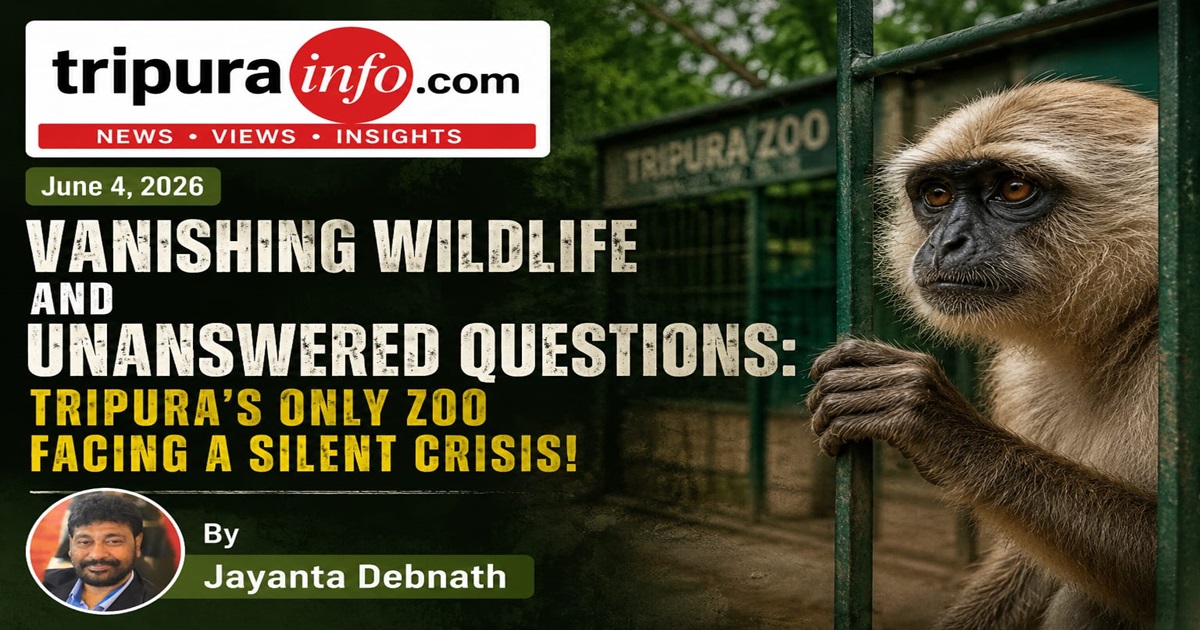
For decades, Sepahijala Zoological Park has been one of Tripura's most cherished wildlife destinations. Nestled within the lush green forests of Sepahijala Wildlife Sanctuary, the zoo has served not only as a tourist attraction but also as a centre for wildlife conservation, education and research. Thousands of visitors, students and nature lovers have visited the sanctuary over the years to witness its rich biodiversity, rare species and natural beauty. However, beneath the tranquil surroundings of this celebrated institution, disturbing questions are now being raised regarding the declining number of animals and birds and allegations of financial irregularities that have remained unresolved despite official inquiries.
According to wildlife enthusiasts, former employees and regular visitors, the number of animals and birds visible within the zoo and its surrounding forest areas has fallen significantly over the past two to three years. People familiar with the sanctuary claim that compared to the wildlife population that existed only a few years ago, less than half of many species can now be seen. The decline is particularly noticeable among monkeys and deer that once roamed freely through the forested stretches of the sanctuary.
Visitors who have been frequenting Sepahijala for many years say the difference is impossible to ignore. They recall a time when large groups of monkeys could be seen throughout the sanctuary and deer were a common sight in various parts of the forest. Today, they claim, the number of these animals appears to have reduced drastically. Ironically, many local residents point out that monkeys can now be seen in larger numbers in villages and settlements surrounding Sepahijala than within the sanctuary itself. Such observations have fuelled speculation that wildlife may be moving away from the protected area in search of food and safer habitats.
One of the most serious allegations emerging from within the institution is that inadequate feeding and poor management have contributed to the decline. Several individuals associated with the zoo allege that food supplied to animals and birds has not always been adequate and that resources allocated for their welfare have not been fully utilized for the intended purpose. These allegations have not been independently verified, but they have gained significance in light of findings contained in an official inspection report submitted by a senior Forest Department officer.
A long-serving animal lover associated with the zoo alleges that over the years some officials posted at Sepahijala treated the institution merely as a place of employment rather than a conservation centre requiring constant care and dedication. According to the source, while a handful of sincere officers and employees continued to work for the welfare of animals, others were more interested in administrative formalities and financial matters. The source further alleges that experienced and dedicated personnel who genuinely cared for wildlife were gradually sidelined from key decision-making processes.
The allegations become more serious when viewed alongside a detailed inspection report submitted by former Sepahijala District Forest Officer Sumit Deb, IFS. The report, which reportedly examined zoo operations between April 2022 and March 2025, highlighted alleged large-scale financial and administrative irregularities during the tenure of former Zoo Director Biswajit Das, IFS who currently serves as Officer on Special Duty to Tripura Higher Education Minister Kishore Barman.
The findings of the inspection are significant because Sepahijala Zoological Park receives substantial government funding. According to available records, nearly Rs.2 crore is allocated annually for animal feed and veterinary medicines.
As per the official records with approximately 250 animals and birds belonging to 32 species currently housed in the zoo, the average expenditure works out to around Rs.54,800 per day or about Rs.219 per animal every day. In addition, approximately Rs.4 crore is allocated annually for construction, maintenance and related activities.
Despite such allocations, the inspection reportedly uncovered serious irregularities in procurement procedures, maintenance of financial records and utilization of funds. The report allegedly found instances where procurement of animal feed, medicines and various materials was conducted without following prescribed tender procedures. Questions were also raised regarding maintenance of cash books, stock registers and other mandatory records. According to the report, multiple supplier names appeared to be linked to a single GST number and beneficiary account, creating suspicion regarding the authenticity of certain transactions. The inspection also reportedly highlighted irregularities in wage payments and muster roll management.
Perhaps the most troubling aspect of the report is its observation that the pattern of transactions pointed towards either gross negligence or deliberate misuse of public funds. The report recommended an independent audit by the Directorate of Audit, Government of Tripura. However, despite the report being submitted in October 2025, sources claim that no special audit, finance inspection or departmental inquiry has yet been initiated.
This apparent lack of follow-up action has generated concern among many within the Forest Department and among wildlife conservationists. Critics question why a report containing such serious observations has not led to a more comprehensive investigation. They also ask why no visible disciplinary action has been taken against officials named in the report. The absence of clear answers has only deepened public suspicion and concern.
Questions have also been raised regarding the present administration of the zoo. Critics allege that routine visits by senior officials often fail to reveal the actual situation because inspections are reduced to formal exercises and favourable reports are presented to visiting authorities. Concerns have similarly been expressed regarding the functioning of the current administration, although no official response has been issued to these allegations.
The importance of Sepahijala extends far beyond its role as a zoo. Established in 1972, the sanctuary covers approximately 18.53 square kilometres and serves as a wildlife sanctuary, zoological park, botanical garden, research centre and eco-tourism destination. Located around 25 kilometres from Agartala, it is home to more than 150 species of birds and numerous rare mammals. The zoo has earned national recognition for its conservation breeding programme of the Clouded Leopard, one of Northeast India's most iconic and endangered species.
The possibility that such an institution may be facing a silent crisis should concern every citizen of Tripura. If allegations regarding declining animal populations, inadequate feeding and financial irregularities are eventually substantiated, the consequences could extend beyond administrative embarrassment. The credibility of wildlife conservation efforts, public trust in government institutions and the future of one of Tripura's most important ecological assets would all be at stake.
Repeated attempts were made to contact the Wildlife Warden Niranjan Debnath, IFS of Sepahijala Zoo on his mobile phone for his comments on the matter. However, he did not answer the calls, nor did he deem it necessary to return the call later. Therefore, we couldn't able to know the Forest Department view in the allegations regarding the decline in animal numbers, food shortages. Until an independent audit or comprehensive inquiry is conducted, many questions will remain unanswered.
What is beyond dispute, however, is that Sepahijala Zoological Park occupies a special place in Tripura's environmental heritage. Ensuring its transparency, accountability and proper management is not merely an administrative responsibility but a commitment to future generations who deserve to inherit a thriving and well-protected natural treasure.
( Writer is a senior journalist and Editor Tripurainfo.com)
(Tripurainfo)
more articles...