"Parabasi: A Cinematic Tribute
to Memory, Migration and
Resilience"
Prasanta Chakraborty
February 25, 2026
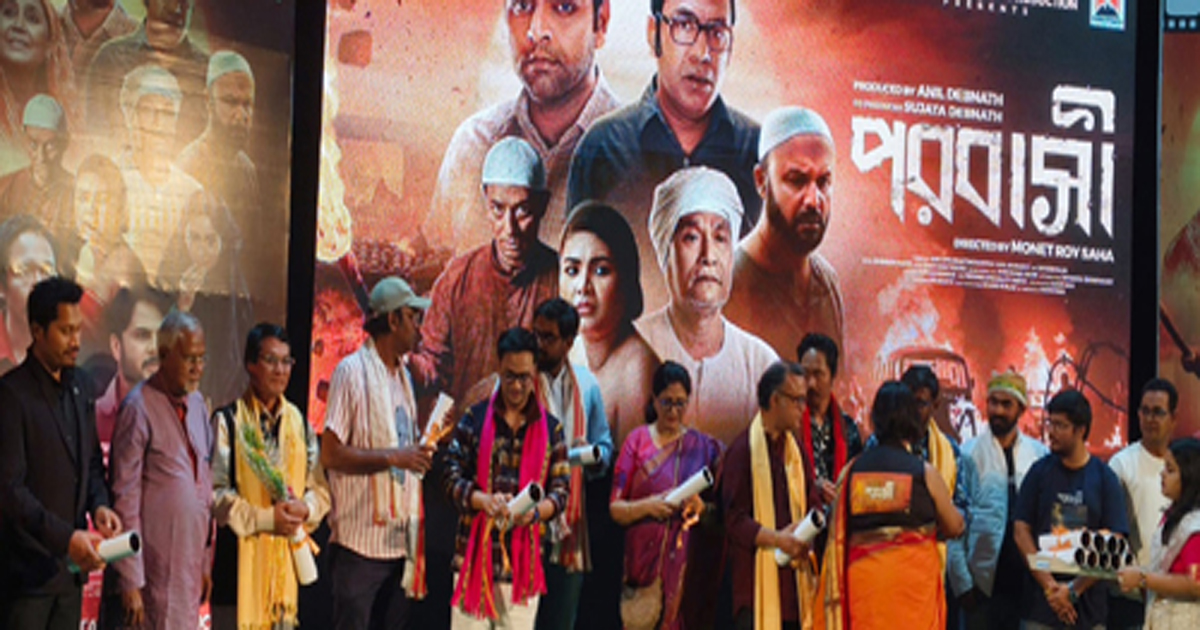
For Anil Debnath, the
Partition was never a remote historical event confined to textbooks. It was a
lived legacy of pain—carried in the memories of his parents and etched into his
own childhood experiences. What began as an attempt to preserve those memories
in the form of a novel eventually evolved into a full-fledged film project
driven by emotion and responsibility.
The transformation from
page to screen came after a close friend, a school teacher from Teliamura, read
the manuscript. Deeply moved by its emotional intensity and historical
relevance, he advised Debnath to consider cinema as a more powerful medium. A
film, he argued, could transcend geographical and linguistic boundaries and
communicate the story to a far wider audience.
 Taking the suggestion to
heart, Debnath—an established businessman from Agartala—decided that the story
deserved a larger canvas. For him, the project was more than a creative
experiment; it was an obligation to history. He felt a pressing need to remind
younger generations of the immense suffering endured by their forefathers
during and after the Partition—displacement from ancestral homes, the trauma of
sudden exile, fractured identities, and the uncertainty that shadowed countless
families.
Taking the suggestion to
heart, Debnath—an established businessman from Agartala—decided that the story
deserved a larger canvas. For him, the project was more than a creative
experiment; it was an obligation to history. He felt a pressing need to remind
younger generations of the immense suffering endured by their forefathers
during and after the Partition—displacement from ancestral homes, the trauma of
sudden exile, fractured identities, and the uncertainty that shadowed countless
families.
 Thus was born Parabasi, his debut film, which
released in several theatres across West Bengal on February 20. The response
was deeply emotional. Many viewers were seen leaving the halls in tears, describing
the film as a rare and sincere attempt to revisit a painful chapter of history
in an era dominated by commercial storytelling.
Thus was born Parabasi, his debut film, which
released in several theatres across West Bengal on February 20. The response
was deeply emotional. Many viewers were seen leaving the halls in tears, describing
the film as a rare and sincere attempt to revisit a painful chapter of history
in an era dominated by commercial storytelling.
 Structured as a docu-drama,
Parabasi centres on Nimai Babu, a
school teacher and former freedom fighter living in East Pakistan. Confident in
the affection and respect of his Muslim students, he believes his family is
safe despite the growing unrest. That belief collapses one evening when a
former student arrives with a group and orders him to vacate his home
overnight. Forced to flee with nothing, Nimai Babu and his family begin a
perilous journey across the border into Tripura.
Structured as a docu-drama,
Parabasi centres on Nimai Babu, a
school teacher and former freedom fighter living in East Pakistan. Confident in
the affection and respect of his Muslim students, he believes his family is
safe despite the growing unrest. That belief collapses one evening when a
former student arrives with a group and orders him to vacate his home
overnight. Forced to flee with nothing, Nimai Babu and his family begin a
perilous journey across the border into Tripura.
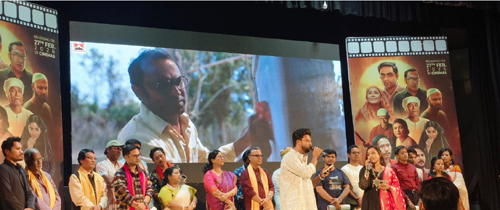 Amid the chaos, he loses
his daughter, only to find her later, married to a Muslim man and converted.
The revelation is heartbreaking, yet his daughter’s quiet assertion—that
conversion is preferable to death—captures the harsh choices imposed by
survival.
Amid the chaos, he loses
his daughter, only to find her later, married to a Muslim man and converted.
The revelation is heartbreaking, yet his daughter’s quiet assertion—that
conversion is preferable to death—captures the harsh choices imposed by
survival.
The family eventually
reaches a remote village in Tripura, largely inhabited by indigenous tribal
communities. Welcomed with warmth and generosity, Nimai Babu resumes his
vocation, teaching the children of the village. But as waves of refugees
continue to arrive, tensions begin to surface. The indigenous community grows
anxious about losing its land, livelihood and cultural identity. The narrative thus
expands beyond a single family’s tragedy to explore the complex layers of
migration, belonging and coexistence.
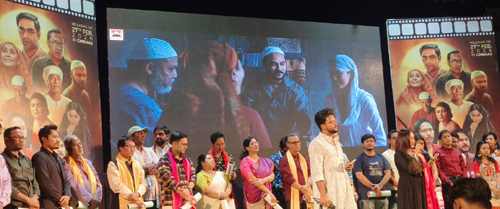 The making of Parabasi was itself a challenging
journey. Shooting in difficult terrain, a remote island in the Damboor lake,
required equipment to be brought in from outside the state, even from Kerala.
Technicians and artistes from Kolkata have spoken highly of Debnath’s
dedication and hands-on involvement in the project. Many also praised the care
and respect he extended to the entire team during production.
The making of Parabasi was itself a challenging
journey. Shooting in difficult terrain, a remote island in the Damboor lake,
required equipment to be brought in from outside the state, even from Kerala.
Technicians and artistes from Kolkata have spoken highly of Debnath’s
dedication and hands-on involvement in the project. Many also praised the care
and respect he extended to the entire team during production.
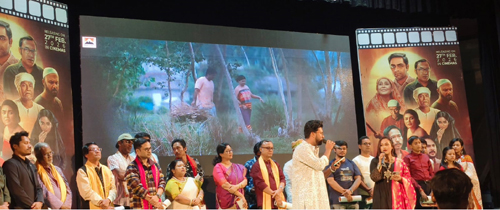 The film is scheduled to be
screened at Rupasi Multiplex from February 27, 2026. The cast and crew hope
audiences in Tripura will turn out in large numbers to support a film that
seeks not only to narrate history but to preserve memory.
The film is scheduled to be
screened at Rupasi Multiplex from February 27, 2026. The cast and crew hope
audiences in Tripura will turn out in large numbers to support a film that
seeks not only to narrate history but to preserve memory.
At its heart, Parabasi is not just a cinematic
venture. It is a personal testimony, a tribute to resilience, and a reminder
that the wounds of Partition still echo across generations.
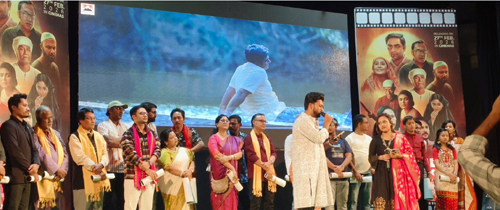 Roles Behind
the Making of Parabasi
Roles Behind
the Making of Parabasi
Bringing Porobasi to life was a
collective effort shaped by a dedicated team of filmmakers, technicians and
performers:
- Director: Monet Roy Saha
- Producer & Story: Anil Debnath
- Co-producer: Sujata Debnath
- Cinematographer: Jayesh Nair
- Screenplay: Anil Debnath and Amitava Bhattacharjee
Lead Cast:
Loknath Dey, Kinjal Nanda, Swati Mukherjee, Sobuj Bardhan, Ankhi Ghosh
(Kolkata), Ranjita Borua (Assam), Sanjoy Kar, Supriti Ghosh, Binod Debbarma,
Ruma Debbarma, Ruhi Debbarma and Ajoy Tripura (Tripura).
- Music Director: Amit Chatterjee
- Art Director: Jayanta Chowdhury
- Playback Singers: Shaan, Durnibar Saha, Iman Mukherjee,
Mekhla Dasgupta and Ikkshita Mukherjee
- Sound Design & Mixing: Subhranil Bose
- Post-production: Studio Collage
Together, this team shaped Parabasi into
a collaborative cinematic effort rooted in history, memory and artistic
commitment.
(Tripurainfo)
more articles...