Union Budget 2026-27: A visionary Blueprint for Vikshit Bharat, 2047
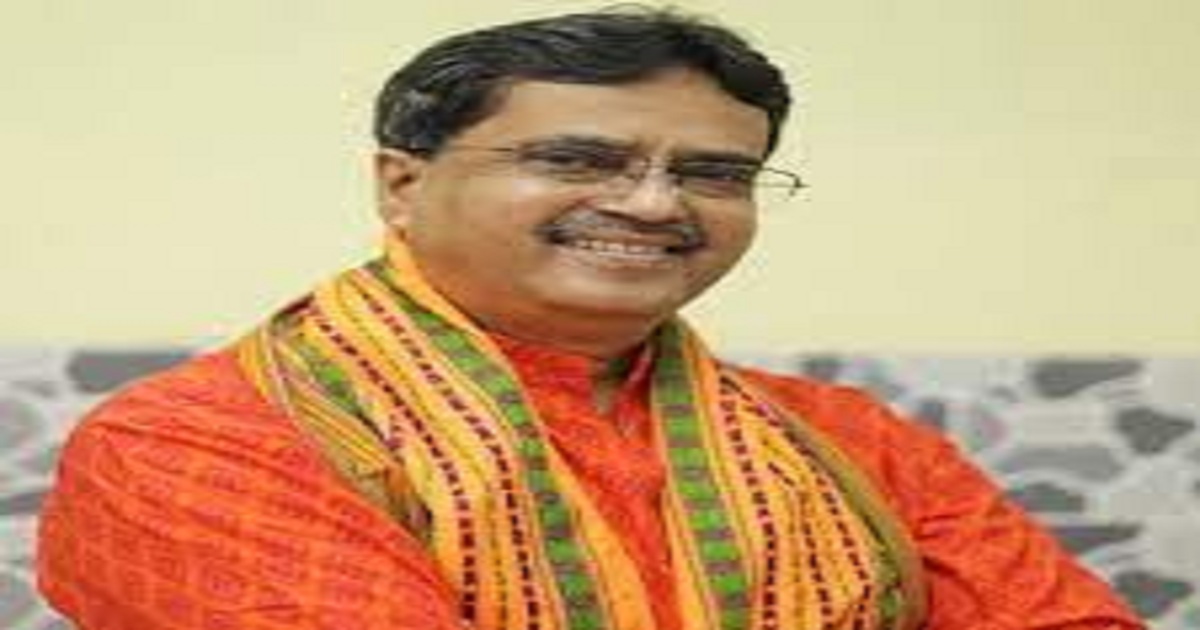
Prof. (Dr.) Manik Saha, Chief Minister, Tripura
February 2, 2026
The Union Budget is the annual, constitutionally mandated financial statement of the Government of India which outlines the estimated revenue and expenditure for the upcoming fiscal year. It is critical for determining economic growth, setting tax policies, allocating resources to sectors like health and infrastructure, fostering social welfare, and maintaining fiscal discipline. The Government of India merged the Railway Budget with the Union (General) Budget, starting from the 2017-18 financial year. This merger aimed to unify government finances, improve efficiency, and enable better multi-modal transport planning, allowing for a single appropriation bill.
Since taking office in May 2014, under the visionary leadership of Prime Minister Narendra Modi the Union Government has focused on a development agenda centered on "Reform, Perform, and Transform," aiming for inclusive growth and Digital India. The government's initiatives over the past 12 years have focused on massive infrastructure development, financial inclusion, and social welfare. Policies aimed at advancing the goal of a developed India by 2047, with initiatives promoting manufacturing, technology adoption, and innovation. "Viksit Bharat Sankalp", reflects the Commitment of the government to achieve the aim of Bharat that is free from social evils, and creating opportunities for everyone, while providing best and affordable health, education, and growth with advancements in the technology.
Success of Government spreads across all the sectors of life covering Economic Reforms and Growth; Infrastructure Transformation; Development of Education, Health, Power connectivity; Social Welfare and "GaribKalyan"; Women empowerment; empowering Divyang, National Security and Governance; Culture and Development of Youth etc.
In the economic arena, India became the fastest-growing large economy whereas the Unified Payments Interface (UPI) has revolutionized transactions, with India leading global real-time digital payments.. The implementation of the Goods and Services Tax (GST) created a unified tax system. Income tax resulting in enhancement of returns to manifolds. In banking inclusion Over 50 crore Jan Dhan accounts were opened, enabling direct benefit transfers (DBT).
Since 2014, India made significant development in infrastructure transformation covering vast highway network expansion, aviation sector, expansion of digital connectivity to Panchayet level, massive infrastructure upgrades were launched for Raliway modernization, including Vande Bharat trains .One of the most priory sector for the Union Government remains its sustained commitment towards Social Welfare and Garib Kalyan including the target 'Housing for All' under the PM Awaas Yojana; 100% rural sanitation coverage under Swachh Bharat Campaign improving health and safety for women; free gas connections were provided to women from below-poverty-line families to ensure clean coking (Ujjala ); enhanced Rural household tap water connections under Jal Jeevan Mission; Ayushman Bharat Yojana, health insurance scheme provides a cover of ₹5 lakh per year to poor individuals.
In the arena of National Security and Governance significant reduction occurred in terror attacks and naxalite violence across the country ensuring internal Security. Country adopted Valiant Policy Decisions like Abrogation of Article 370 in Jammu & Kashmir, the ban on Triple Talaq, and the implementation of One Rank One Pension. To strengthen defense making focus kept on Atmanirbhar Bharat (Self-Reliant India) approach. The period witnessed increased global influence of India. Government continues Cultural Renaissance.
The region of Northeast India emerged as a forerunner of the Viksit Bharat vision, shedding its past image as a troubled frontier region. Over the past 11 years, under the leadership of Prime Minister Narendra Modi, the region has witnessed an unprecedented shift, from an insurgency-hit and conflict-ridden and infrastructure- deficient region to a zone of development, connectivity, and prosperity. This move is an outcome of a focused policy shift and inclusive governance.
As a part of its continued endeavour for development of all, the Union Budget for 2026-27 presented by Smt. Nirmala Sitaraman on 1st February, 2026 which outlines India's economic priorities with the focus on growth, stability and inclusive development.
Presenting the Budget she stated that this year Budget is 'Yuva Shakti' Driven and Inspired By three 'Kartavya' i.e (i) to accelerate and sustain economic growth by enhancing competitiveness and building resilience to volatile global dynamics, (ii) to fulfil the aspirations of people and build their capacity and make them strong partners in India's path to prosperity and (iii) to ensure 'sab ka saath, sab ka vikas.' It is to ensure that every family, community, region has access to resources, amenities opportunities for meaningful participation. She also outlined the threefold approach on supportive ecosystem for the 3 Kartavyas which includes sustaining the momentum of structural reforms, Robust and resilient financial sector and Cutting- edge technologies, including Al. The main objective of the budget is to development of marginal people, infrastructure development, augmentation of each family income. Main pillars and announcements of the general budget includes fiscal target, capital expenditure, Income Tax Reforms, Railway & Transport, Health & Medicine, Technology & Industry, Special Announcement for North Eastern Region, Development of Buddhist Circuit, eco Friendly Transportation, Industrial corridor, Health Infrastructure, Tourism & Employment, Women Empowerment, Agriculture & Technology etc. like estimated reduction of the fiscal deficit to 4.3% of GDP in the financial year 2026-27, allocation of Rs. 12.2 lakh Cr under Capital Expenditure (Capex). The government announced a massive push for connectivity including the new Varanasi-Siliguri High-Speed Rail Corridor. Import duties on 17 life-saving cancer drugs and 7 rare disease drugs have been completely withdrawn. Rs. 40,000 crore has been allocated for the semiconductor sector and Rs. 10,000 crore has been allocated for the development of the pharma sector under the 'Biopharma SHAKTI' scheme.
Budget contains the immensely important proposals like creation of 3 new institutes of Pharmaceutical education and research (NIPER) and upgrading 7 existing one; increase in outlay for Electronics Components Manufacturing Scheme to Rs.40,000 crore; 3 dedicated Chemical Parks, Mega Textile Parks, a dedicated Rs. 10,000 crore SME Growth Fund, new Dedicated Freight Corridors, 5 Regional Medical Hubs and 3 new All India Institutes of Ayurveda, Integrated development of 500 reservoirs and Amrit Sarovars for increasing farmer incomes. Government provided Rs.1.4 lakh crore to the states for the FY 2026-27 as Finance Commission Grants as recommended by the 16th Finance Commission. For the inclusive development in Sports Sector initiative will be taken under Khleo India Mission. New Income Tax Act will be introduced.
The budget highlights the Northeast as the main focus of the 'Purvodaya' plan which will facilitate the adopted initiative for development of the region. To develop Culture and Tourism in the Northeast 'Buddhist Circuit' will be created by connecting the states of Arunachal Pradesh, Sikkim, Assam, Manipur, Mizoram and Tripura. It has also been announced to provide 4,000 e-buses to ensure pollution-free transportation in the North-East. Integrated East Coast Industrial Corridor with Durgapur Node will be developed, which will play an important role in expanding trade in the Northeast. The Mental Hospital located in Tezpur, Assam will be upgraded as a Regional Apex Institution.
This budget will play an important for the economic and social development of Tripura. Tripura's inclusion in the 'Buddhist Circuit' project will increase the number of tourists visiting historical places like Pilak or Benuban Vihar, which will create job opportunities for local youth. The government has announced to train 10,000 tourist guides and the State will be benefited to a great extent out of it.
The budget stressed upon Women Empowerment. It has been proposed to establish a special 'SHE-Mart' for marketing of products of Women SHGs. The Varanasi-Siliguri high-speed corridor will connect Tripura more efficiently with the Indian mainland, making travel and communication faster and easier. In the Budget announcement made for multilingual Al tool 'Bharat-VISTAAR and Farmers in Tripura will receive weather updates and farming guidance in their local languages through it.
The Budget 2026-27 strikes a balance between technological excellence and regionally balanced development. Investment in tourism and digital agriculture infrastructure will provide long-term benefits for north-eastern states like Tripura. From manufacturing and world-class infrastructure to healthcare; from empowering rural heartlands to embracing cutting-edge Al; from modern sports arenas to sacred pilgrimage destinations, this Budget ignites the aspirations of our youth, women, and farmers in every village, town and city, transforming dreams into reality and strengthening the foundation of a self-reliant, globally competitive India. This Budget is a visionary Blueprint which will guide India's Journey towards Vikshit Bharat by 2047.
(Tripurainfo)
more articles...