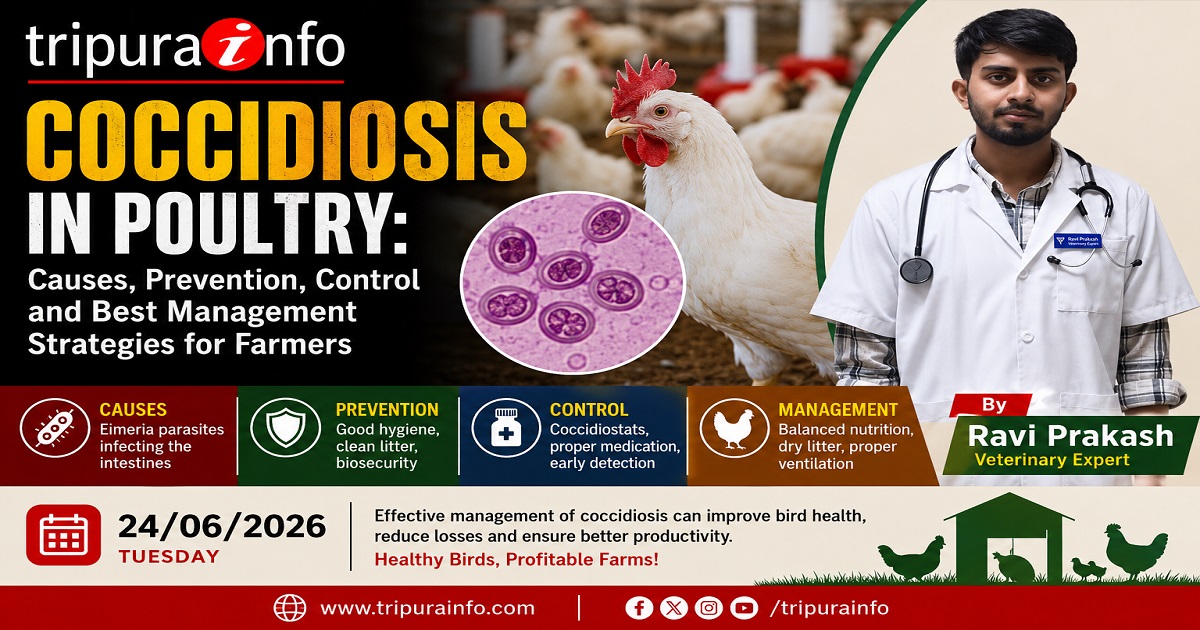
Coccidiosis in Poultry: Causes, Prevention, Control and Best Management Strategies for Farmers
Ravi Prakash
June 24, 2026
Introduction
The poultry sector plays a vital role in ensuring food security and generating income for rural and commercial farmers. However, infectious and parasitic diseases continue to limit productivity and profitability. Among these diseases, coccidiosis remains one of the most significant challenges faced by poultry producers worldwide. The disease affects birds of all production systems and is responsible for considerable economic losses due to poor growth, reduced feed conversion efficiency, increased medication costs, and mortality.
Coccidiosis is an intestinal disease caused by protozoan parasites of the genus Eimeria. These parasites multiply within the cells lining the intestine, causing tissue damage and impaired nutrient absorption. Young birds are particularly vulnerable, although birds of any age may be affected under favorable conditions. Because the disease spreads rapidly through contaminated litter and feces, effective prevention and management are essential for successful poultry production.
Etiology
Several species of Eimeria infect chickens, each affecting different regions of the intestinal tract and varying in pathogenicity. The most important species include Eimeria tenella, E. acervulina, E. maxima, E. necatrix, E. brunetti, E. mitis, and E. praecox. Among these, E. tenella is considered one of the most pathogenic and is commonly associated with severe cecal coccidiosis.
The infective stage of the parasite is known as a sporulated oocyst. Birds become infected by ingesting these oocysts through contaminated feed, water, litter, equipment, or the environment.
Transmission and Risk Factors
The transmission of coccidiosis occurs primarily through the fecal–oral route. Oocysts shed in the droppings of infected birds undergo sporulation under suitable environmental conditions and become infective. Warm temperatures, high humidity, wet litter, overcrowding, and poor sanitation promote sporulation and facilitate disease spread.
Factors that increase the risk of coccidiosis include:
• High stocking density
• Poor litter management
• Inadequate ventilation
• Contaminated feed and water
• Stress due to transportation or environmental changes
• Lack of effective vaccination or preventive medication
Clinical Signs
The severity of clinical signs depends on the species of Eimeria, the number of oocysts ingested, and the immune status of the birds. Common clinical signs include:
• Reduced feed and water intake
• Depression and weakness
• Ruffled feathers
• Poor growth and weight gain
• Watery or bloody diarrhea
• Pale comb and wattles
• Dehydration
• Increased mortality in severe outbreaks
Subclinical infections may not show obvious symptoms but can significantly reduce growth performance and feed efficiency.
Economic Importance
Coccidiosis causes substantial economic losses to the poultry industry. Losses arise from reduced body weight gain, poor feed conversion ratio, decreased egg production, treatment expenses, and mortality. In addition, intestinal damage caused by coccidial infection predisposes birds to secondary bacterial infections, further increasing production costs.
Diagnosis
Diagnosis is based on flock history, clinical signs, postmortem examination, and laboratory testing. Characteristic intestinal lesions, bloody contents in the ceca, and the presence of oocysts in fecal samples are important diagnostic indicators. Microscopic examination and lesion scoring are commonly used to confirm infection.
Prevention and Control
Prevention is more effective and economical than treatment. An integrated control program should combine good management practices, biosecurity measures, vaccination, and strategic use of anticoccidial drugs.
Key preventive measures include:
• Maintaining clean and dry litter
• Regular removal of wet and caked litter
• Providing adequate ventilation
• Preventing contamination of feed and water
• Avoiding overcrowding
• Practicing strict biosecurity
• Monitoring flock health regularly
• Following recommended vaccination schedules
Best Management Strategies for Farmers
Successful coccidiosis control depends largely on day-to-day farm management. Farmers should focus on maintaining a clean environment and reducing conditions that favor oocyst survival. Recommended practices include:
• Keep litter dry and repair leaking drinkers
• Maintain recommended stocking densities
• Clean feeders and drinkers regularly
• Restrict visitor access to farm premises
• Isolate sick birds promptly
• Use vaccines where appropriate
• Consult veterinarians before medication use
• Maintain accurate disease records
• Educate farm workers on hygiene practices
Conclusion
Coccidiosis continues to be one of the most important parasitic diseases affecting poultry production worldwide. Although the disease can cause severe economic losses, it can be effectively controlled through proper management, sanitation, biosecurity, vaccination, and responsible use of anticoccidial drugs. Farmers who adopt an integrated prevention strategy are better positioned to maintain flock health, improve productivity, and ensure sustainable poultry production.
References
1. Calnek, B.W. (Ed.). Diseases of Poultry. Wiley-Blackwell.
2. Soulsby, E.J.L. Helminths, Arthropods and Protozoa of Domesticated Animals.
3. Levine, N.D. Veterinary Protozoology.
4. Merck Veterinary Manual. Coccidiosis in Poultry.
5. World Organisation for Animal Health (WOAH). Terrestrial Animal Health Manual.
6. Conway, D.P., & McKenzie, M.E. Poultry Coccidiosis: Diagnostic and Testing Procedures.
(Ravi Prakash, 3rd Year BVSc & AH Student, College of Veterinary Science, Selesih Aizawl, Mizoram, India)
(Tripurainfo)
more articles...