Street Food’s Deadly Trap in Tripura: The Silent Public Health Crisis Behind the Lure of Taste
Sudip Nath, Feelancer
September 19, 2026
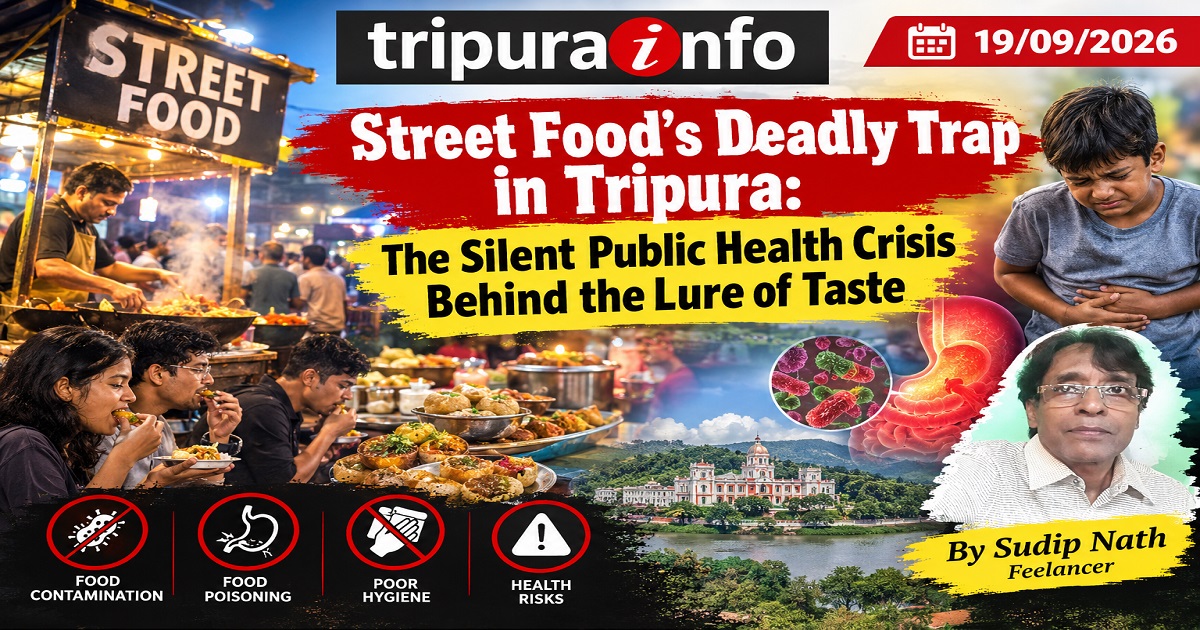
A public-health crisis can never be solved merely by building more hospitals. If society is to become healthier, the causes of illness must also be addressed. Ensuring food safety is therefore not an alternative to medical treatment; it is the stage before treatment—the first step towards prevention.
The concerns surrounding food safety in Tripura cannot be resolved through occasional enforcement drives alone. What is required is a long-term, science-based policy. Hygiene and safety must be ensured at every stage—from food production and storage to transportation, preparation and sale. At the same time, equal importance must be given to training food vendors, facilitating licensing, conducting risk-based inspections and sample testing, and creating public awareness.
Street-food vendors should not be viewed as enemies. Many depend on small food businesses for their livelihood. The objective, therefore, should not simply be to shut down their businesses, but to provide training in safe food preparation, facilitate licensing, help them comply with hygiene standards and provide appropriate infrastructure where necessary. Safe street food can protect public health while also protecting the livelihoods of small entrepreneurs.
Schools and colleges must also give greater importance to food education. Eating habits formed during childhood often continue throughout life and can influence long-term health. Educational institutions should therefore encourage nutritious food, create awareness about foods high in excessive amounts of oil, salt and sugar, and make regular physical activity an integral part of student life.
There is another important aspect that the administration needs to consider. Officials responsible for enforcing food-safety laws require adequate manpower, modern laboratory facilities, administrative support and appropriate institutional protection. Laws can be enforced effectively only when those responsible for enforcing them are themselves provided with an effective working environment.
Citizens, too, have an important responsibility. Choosing clean and safe food, encouraging children to eat balanced home-prepared meals, avoiding excessive consumption of foods high in oil, sugar and salt, and making regular walking or physical exercise part of everyday life are individual choices—but their cumulative impact is social.
The guiding principle of public health across the world is simple: prevention is better than cure. Preventing disease is often more effective, less costly and more humane than treating it after it has developed. The fight against diabetes, cardiovascular disease and other non-communicable diseases is no exception.
Tripura now has an important opportunity. If safe food, sound nutrition policy, an effective food-safety system and healthy lifestyles are given priority today, future generations can be protected from many preventable diseases. But if these warnings are ignored, increasing the number of hospitals alone will not reduce the number of patients.
The pleasure of taste is temporary; good health is a lasting asset. Safe food must therefore be regarded not as a luxury, but both as a matter of public responsibility and a basic concern of public health. The food culture we create today will become the health profile of Tripura tomorrow.
The taste of food may remain on the tongue for only a few minutes, but its effects on the body can persist for years. Modern medical science has clearly established that dietary habits are among the important risk factors behind the growing burden of non-communicable diseases. Diabetes, obesity, hypertension, cardiovascular disease and fatty liver disease are all associated, to varying degrees, with excessive calorie intake and diets high in refined carbohydrates, salt, sugar and unhealthy fats.
Of particular concern is the repeated use of the same cooking oil at high temperatures. Repeated heating can alter the chemical composition of edible oils and increase the formation of potentially harmful compounds. Food-safety experts have therefore long advised against repeatedly reusing cooking oil. Such practices can affect food quality and may also create health risks when they become habitual.
Another concern is the increasing consumption of ultra-processed foods. Their attractive taste, long shelf life and convenience have contributed to their popularity. Yet many such foods may contain excessive amounts of sugar, salt, saturated fat or trans fat. Regular and excessive consumption can contribute to excess energy intake, weight gain and, over time, reduced sensitivity to insulin. This condition, known as insulin resistance, is one of the major risk factors for type 2 diabetes.
Excess fat accumulation can also affect the liver. The condition in which fat accumulates in the liver in the absence of significant alcohol consumption is now commonly referred to as Metabolic Dysfunction-Associated Steatotic Liver Disease (MASLD). It is closely associated with obesity, diabetes and unhealthy dietary patterns. In other words, the same lifestyle can contribute to the development of several chronic diseases.
Physical inactivity adds another dimension to the problem. Spending long hours sitting, getting insufficient regular exercise and consuming more calories than the body requires can together increase the risk of diabetes and cardiovascular disease. Thus, medicines alone are not enough; everyday eating habits and regular physical activity are also important components of disease prevention.
That is why preventive health policy is receiving increasing emphasis around the world. A healthy diet, regular physical activity, adequate sleep, avoidance of tobacco and control of body weight can all contribute to reducing the risk of diabetes and other non-communicable diseases.
The question, therefore, is not simply what we eat. It is also how the food is prepared, how often the cooking oil is reused, how much we consume, and how healthy our overall lifestyle is. The fight for public health does not begin in a hospital bed. It begins in the kitchen, in the marketplace and with the choices we make every day.
Food is one of the fundamental necessities of human life. Yet when food itself gradually becomes one of the causes of illness, the issue can no longer be confined to individual choice; it becomes a question of public health, economics and public policy. Tripura, too, is increasingly confronted with this reality.
Once, food contamination generally meant adulteration, rotten or stale food, artificial colours, formalin or excessive pesticide residues. These problems still exist. But today we are confronted with another, more complex form of dietary risk—the rapid spread of foods high in fat, salt and sugar (HFSS), the growing consumption of ultra-processed foods, and the increasing availability of roadside food prepared without adequate attention to hygiene.
From cities to villages, street food has become increasingly popular across Tripura. Street food itself is not a crime; many traditional Indian street foods are an integral part of our culinary culture when prepared safely. The problem arises when basic hygiene is ignored, the same cooking oil is repeatedly reused, food is prepared in unhygienic surroundings, or safe drinking water and essential sanitation practices are neglected. Such conditions naturally raise serious public-health concerns.
The World Health Organization (WHO), the Indian Council of Medical Research (ICMR), the National Institute of Nutrition (NIN), and the Food Safety and Standards Authority of India (FSSAI) have long emphasized the health risks associated with excessive consumption of sugar, salt, trans fats and highly processed foods. Such dietary patterns are associated with increased risks of obesity, type 2 diabetes, hypertension, cardiovascular disease and other non-communicable diseases. Food safety, therefore, can no longer mean merely freedom from adulteration; nutritional safety is equally important.
Our pattern of disease is changing along with our eating habits. In addition to infectious diseases, non-communicable diseases (NCDs) have emerged as one of the major health challenges facing India. Diabetes, cardiovascular disease, stroke, fatty liver disease and obesity are among the conditions in which dietary habits constitute important risk factors. This does not mean that every street food or every food eaten outside the home is equally harmful. Rather, the method of preparation, quality of ingredients and nutritional composition of food all deserve equal attention.
The question for Tripura, therefore, is not merely one of law enforcement; it is also a question of public awareness. Regular monitoring by food-safety authorities, adequate laboratory capacity, training for food vendors and public awareness together form the foundation of a safe food system. Occasional enforcement drives alone cannot provide a lasting solution.
Most importantly, the food culture we are creating today will determine the health burden borne by the next generation. If the momentary pleasure of taste becomes a cause of long-term illness, the issue is no longer merely an individual choice; it also reflects a collective social failure. It is therefore time to rethink food—not merely as a means of filling the stomach, but as a foundation of a healthy life.
(Tripurainfo)
more articles...